

Country Overview
Population: 9,591,853
Population Growth Rate: 0.81
Religious Groups Breakdown: Muslim 76%, Christian 9%, Buddhist 10%, Other 5%
Youth Unemployment: 9.84%
UNDP HDI: 26
Life Expectancy (Male Life Expectancy & Female Life Expectancy): 78.6 (M: 77.2, F: 80.9)
Literacy Rate (Male Literacy Rate & Female Literacy Rate): 98.2% (M: 94.4%, F: 96.2%)
Primary School Completion Rate: N/A
Median Age: 33.5
Capital: Abu Dhabi
Largest City: Dubai
Nationality: Emirati
Currency: Emirati Dirham (AED)
Languages: Arabic (official); English is the second largest spoken language
Agriculture: Limited agriculture due to arid climate and lack of freshwater
Industries: Oil and Gas, Tourism, Real Estate, Financial Services, Manufacturing
Geography
The United Arab Emirates (UAE) is a small country that is actually a confederation of seven contiguous emirates: Abu Dhabi (the capital), Ajman, Dubai, Fujairah, Ras Al Khaimah, Sharjah and Umm Al Quwain. The UAE has extensive oil and gas reserves. It borders Saudi Arabia and Oman. It has a strategic location on the Arabian Peninsula, overlooking approaches to the Strait of Hormuz, which is a vital transit point for world oil. The UAE’s oil reserves are predominantly located in Abu Dhabi, making it the richest emirate. In addition to oil and gas, the UAE has significant deposits of limestone, gypsum, and marble in addition to deposits of copper and gold.
The UAE can be divided into three main geographical zones
- Coastal Plain - flat, low lying, barren coastal plain along the southern shore of the Persian Gulf stretching about 1318 km
- Desert - dunes extend from the coast into a vast desert which blends in the Empty Quarter, the world's largest sand desert
- Mountain Range - a rugged mountain range shared with Oman in the north and the east which provide a cooler climate
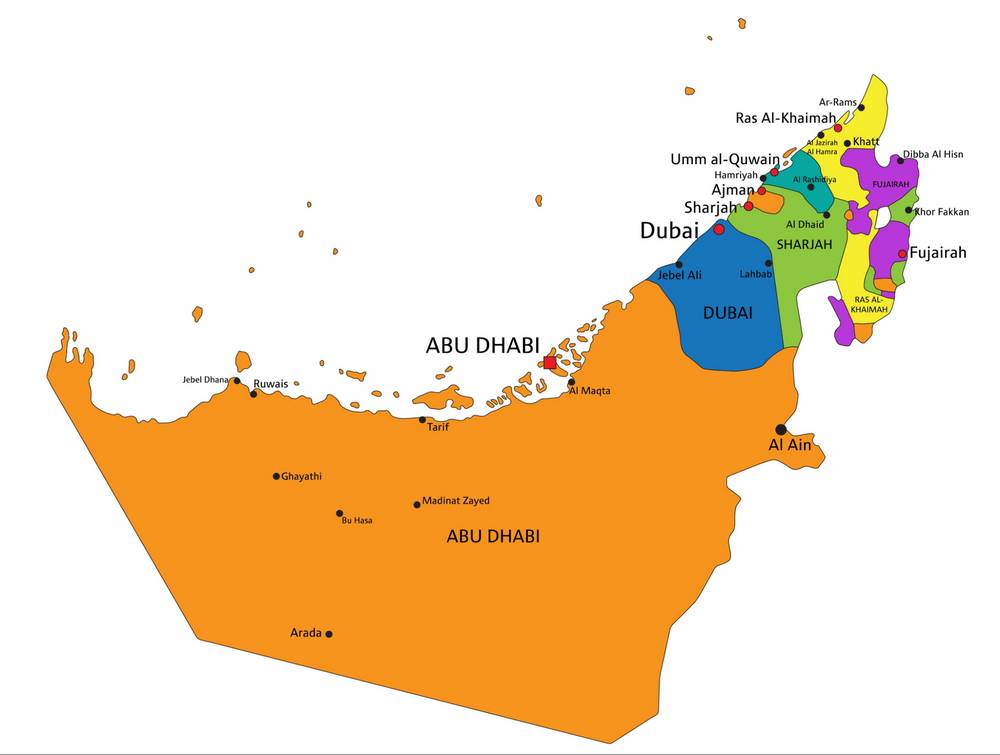
The Emirates has a desert climate, with high temperatures all-year round, except in the eastern mountain area where temperatures are cooler.
The UAE has an area of approximately 82,880 sq km, which, to put into perspective, is slightly smaller than the state of Maine. It is a flat country made up of coastal areas and desert; only 1% of the land is arable. Dust and windstorms are frequent problems caused by the flat terrain. Other geographical-related issues are desertification, pollution from oil spills, and a decreasing availability of freshwater. The latter is due to limited access to freshwater sources and the low rainfall; the UAE is one of the world’s 10 most water-scarce countries. On average, the UAE receives between 140 to 200 millimeters of rain per year with some areas receiving up to 350 millimeters. To address this shortfall, the UAE has built desalination plants. The desalination process has recently become more expensive due to concentrated wastewater resulting from the desalination, making the water in the Gulf even more salty. In addition to the cost, desalination has had negative effects on the environment as this process produces a toxic, salt-rich byproduct called brine that is often dumped into the ocean making sea water undrinkable.
Climate Change
Due to the extremely high temperatures in the UAE which are projected to increase due to global warming, climate change poses a prominent threat. These increased temperatures can worsen heat waves, impacting the daily lives of citizens, energy consumption, and the overall quality of life. As a low-lying coastal nation, the UAE is also vulnerable to rising sea levels. This threatens coastal infrastructure, residential areas, and important facilities/buildings like ports and desalination plans.With the already limited freshwater supply, climate change intensifies the water scarcity issues the UAE faces. The lack of rain in addition to the high evaporation rates strains the water supply, impacting agriculture and daily life. Additionally, the high temperatures and inconsistent rain patterns contribute to the expansion of deserts and the degradation of the little arable land they have.
To mitigate this issue, the UAE has taken significant steps. The government established the UAE Council for Climate Change and Environment to foster partnership and collaboration between the public and private sector for research purposes. The government also renamed the Ministry of Environment and Water to the Ministry of Climate Change and Environment. This ministry and the Ministry of Education jointly launched the “Our Generation” initiative which has the goal of developing a school curriculum that raises awareness of students and encourages them to take measures to reduce their carbon footprint. The UAE has also invested heavily in renewable energy sources, aiming to diversify their energy usage and reduce greenhouse gas emissions. Two great examples of these initiatives are the Mohammed bin Rashid Al Maktoum Solar Park which is the largest single-site solar park in the world and the Barakah Nuclear Energy Plant which is the UAE’s first nuclear power plant.
Geography Resources
History
The region now known as the UAE has been inhabited for thousands of years, with evidence of ancient civilizations. In the 7th century, the region became part of the Islamic Caliphate which influenced its culture and trade. During the medieval period, the UAE was part of a maritime trade network that connected it to Persia, India, and East Africa. The coastal towns were known for their pearl diving industry which became a significant part of the economy. Later, Portuguese explorers arrived in the region in the early 16th century and established control over the maritime trade. This control weakened by the 17th century, and eventually the British established control in the 18th century. In the late 19th century, the British negotiated agreements establishing sheikhdoms as protectorates, giving the British exclusive rights to handle their foreign relations. These protectorates were referred to as the Trucial States.
In more modern history, one key event that served as a forum for cooperation between the emirates was the establishment of the Trucial States Council in 1952. Simultaneously, the discovery of oil in the region in the 1950s and 1960s transformed the economy. Oil revenues heavily stimulated the economy and led to rapid modernization and infrastructure development. Throughout this time, the British still had influence in the region. However, they withdrew from the Gulf in 1971. On December 2, 1971 the UAE emerged as a federation after the British withdrew. This federation consisted of the six emirates, Abu Dhabi, Dubai, Sharjah, Ajman, Umm Al Quwain, and Fujairah with Ras al Khaimah joining later in February 1972.
For centuries the sheikhdoms that make up the United Arab Emirates were individual competing dynasties. During the 19th century, the British called the area the Pirate Coast because of occasional raids on shipping. In 1820, the British negotiated a treaty with the coastal tribes that prohibited piracy. In 1892, the British negotiated agreements establishing the sheikhdoms as protectorates, which gave the British exclusive rights to handle their foreign relations, and referred to these protectorates as the Trucial States. These agreements lasted until Britain withdrew from the Gulf in 1971. After unsuccessful efforts to include Qatar and Bahrain in a union of Arab emirates, the seven sheikhdoms of Abu Dhabi, Dubai, Sharjah, Ras al-Khaimah, Umm al-Quwain, Ajman and Fujairah established the independent United Arab Emirates in December 1971.
History Resources
Government
Government Structure
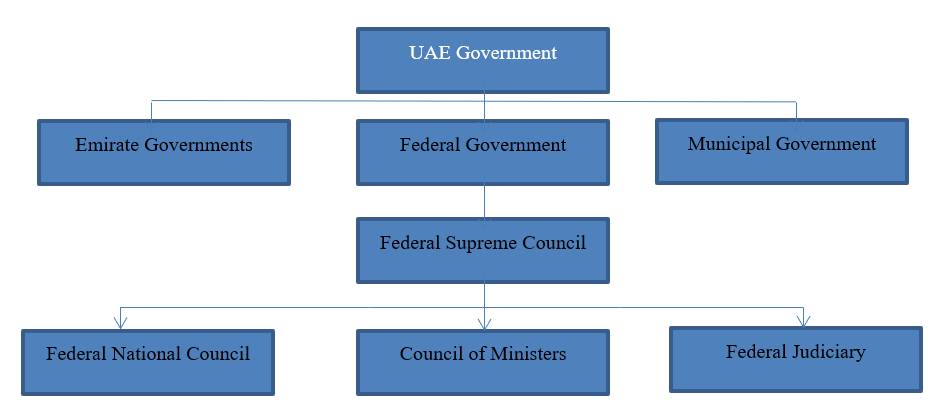
The UAE is a constitutional monarchy federation that has developed into a modern and wealthy country. It is relatively moderate in the area of foreign policy, which has given them an important role in diplomacy in the region. The UAE is constantly developing its political system and seeks to make it more responsive to its society’s needs and the country’s economic growth.
Each of the seven emirates has its own leader. Traditionally the leader of Abu Dhabi is elected as president of the UAE and the leader of Dubai is the prime minister, even though this is not a written rule. The President of the UAE is the ruler of Abu Dhabi, President Mohammedbin Zayed Al Nahyan, and the Vice President and Prime Minister is the ruler of Dubai, vice president and Prime Minister Muhammad bin Rashid Al Maktoum who is responsible for leading the government and policy implementation. The relationship between the federal and local governments is laid down in the constitution and allows some flexibility in the distribution of authority.
On the whole, leadership in each emirate falls to that emirate’s most politically-prominent tribe, and the paramount leader, the emir, is selected by the notables of the ruling tribe from among their number. The choice is usually, but not always, a son of the previous emir. Each tribe has its own leader, or sheikh, and a certain degree of political pluralism, as seen in the institution of the majlis, is necessary to maintain the ruling family’s position.
Federal Power
The federal government holds jurisdiction over matters of national importance such as foreign policy, defense, national security, and federal law. Traditional government still plays an important part in the government of the UAE, with the institution of the majlis (council) maintaining a role in ensuring that the people have free access to their rulers. During the majlis, the leader hears grievances, mediates disputes, and disperses largesse. In theory, anyone under the leader’s rule must be granted access to the majlis.
According to the constitution, most of the power rests in the hands of the individual emirs (leaders) of each emirate; however, in recent years more power has been given to the federal government. The highest constitutional authority in the UAE is the Federal Supreme Council (FSC). The council consists of the rulers from each of the seven emirates and has both legislative and executive powers. Choosing among the councils’ own members, they appoint the president and vice president. The FSC elects a cabinet, also known as the Council of Ministers, that is headed by the prime minister. The cabinet is responsible for managing all internal and foreign affairs. The Cabinet ensures the execution of federal laws, regulations, and policies across all emirates.
The Federal National Council (FNC) is the legislative body and the consultative council to the FSC. The council has 40 members. Half of the members are appointed by the FSC and the other half are appointed by public election every four years. The FNC contributes to legislative discussions and policy recommendations. Prior to the election in 2006, all members were appointed by the FSC. This was the first time the public had access to political participation and was a big reformation of the country’s political system. The elections are based on individual candidates since political parties are prohibited.
Legal System
The legal system in UAE is based on both civil law and sharia-based laws. Sharia, meaning “path,” influences legal code to varying extent across the Islamic world. Sharia guides all aspects of Muslim life, including daily routines, familial and religious obligations, and financial dealings. Islam is the state religion according to the constitution and the principle source of law, but the legal system has changed and modernized more recently. Sharia laws are mainly enforced in criminal and social law cases for Muslims. Islamic law is not applied to non-Muslims. Commercial disputes are usually solved by civil courts. In addition to the sources of law, the UAE constitution established a federal court system which includes the Courts of First Instance (Trial Court), the Courts of Appeal, and the Supreme Court. Locally, each emirate can establish its own judiciary or follow the federal court system. The constitution also guaranteed fundamental rights and freedoms including freedom of speech, religion, and assembly, but there are limitations.
Current Initiatives
The former Vice President and Prime Minister Mohammad Bin Rashid Al Maktoum launched government plans called UAE Centennial 2071, through which he aimed to make the UAE the best country in the world over the next five decades. Leaders will achieve this goal by developing knowledge, supporting science and research, and involving their youth in leadership training. This is an extension of former President Mohammed’s UAE Vision 2021 which has similar objectives.
Current Leadership
Though President Khalifa has ruled the UAE since his father’s death in 2004, for much of the past decade his younger brother Sheikh Mohamed bin Zayed bin Sultan Al-Nahyan, commonly referred to as MBZ or MbZ, has effectively been in charge, leading negotiations and diplomacy with other nations. Khalifa suffered a stroke in 2014, which further strengthened MBZ’s role. MBZ is the crown prince of Abu Dhabi and the deputy supreme commander of UAE’s armed forces. He is sometimes considered the UAE’s de facto ruler. In 2022, he passed and after his death, his brother, President Mohamed bin Zayed Al Nahyan took over. In such, the Al Nahayan royal family’s dynasty in the UAE continues.
Government Resources
International & Regional Issues
UAE Role in the Yemen War
The UAE has been engaged in the war in Yemen since March of 2015, when they entered the conflict as part of a Saudi-led coalition with the aim of combating the opposition Houthi movement, helping the country reach political stabilization, and restoring President Abdrabbuh Mansour Hadi and his government. The war is ongoing and Houthi rebels control Sanaa, the capital city. The participating countries of the coalition have a variety of reasons for their involvement. Saudi Arabia and the UAE are concerned about Iranian influence in the Gulf. The Emirates are also guided by other geostrategic interests. Beginning in early 2018, the UAE began backing southern separatists whose goal is to re-establish a distinct southern Yemen state. The separatists are opposed to a united Yemen led by Hadi, which seemingly contradicts the objective of the Saudi-led coalition. However, by supporting this group through arms and funding, the UAE could gain access to and influence over important and lucrative waterways that could be used for transporting gas and oil.
The UAE has also been involved in providing humanitarian aid and emergency assistance to the Yemeni population. In 2020, the UAE officially withdrew its military forces from Yemen in phases, but this did not mean a complete withdrawal of involvement. The UAE shifted from direct combat to indirect engagement, still extending great influence in the region. Instead of their own troops, the UAE now relies more on local proxies and partners in Yemen.
Migration and Refugees
The UAE has given approximately 100,000 Syrian refugees residency permits since 2011 and contributed more than 700 million USD to refugee aid efforts and host countries. The UAE’s approach to this form of aid combines the existing migration system, known as the kafala system, with a quasi-asylum policy. So, the UAE doesn’t officially recognize Syrians as refugees and therefore they are allowed to stay through temporary visas offered under the kafala system.
UAE Role in the GCC
As a member of the Gulf Cooperation Council (GCC) the United Arab Emirates has, along with neighboring countries, created regional unity and stability. This part of the Middle East has been more stable than others, but this stability has been challenged recently. Tension between Qatar and the UAE, Saudi Arabia, Bahrain and Egypt has increased for several years as Qatar was accused of undermining the security of its neighbors through interventions in their domestic affairs and through support for extremists in the region. This escalated in June 2017 when Saudi Arabia, the UAE, Bahrain and Egypt cut off economic and diplomatic ties with Qatar. This crisis led to economic and diplomatic ties being severed between Qatar and other GCC countries. However, in 2023, these diplomatic ties were restored. More recently, with the Israel-Palestine conflict, the threat of regional conflict involving Iran and its proxy groups has brought the GCC states closer together. Despite their varying approaches, there is consensus that Israel bombing Gaza should end, and any escalation would be counterproductive. The UAE specifically calls for a resolution to this conflict, emphasizing the importance of a political track and a two-state solution for regional stability.
COVID-19
The UAE’s response to the pandemic was quick and decisive with many public health measures being immediately implemented. The emergency response system, managed by the National Crisis and Emergency Management Authority, issued the first alert about the outbreak of the virus before it was even declared as a public health emergency by the World Health Organization. The government launched a strong vaccination campaign, aiming for widespread coverage. They authorized the emergency use of several vaccines, hoping to immunize people to prevent the spread of the virus.
Since the pandemic, the UAE administered more than 24 million vaccine doses with nearly 10 million people fully vaccinated. The pandemic also furthered digital healthcare through telemedicine which is still used in the UAE today.
Despite the challenges posed by the pandemic, the UAE maintained its economic stability. With only essential personnel working, the government supported businesses and citizens through stimulus packages, financial aid, and flexible regulations. Many sectors, like technology, e-commerce, and healthcare, even experienced growth during this time. However, like other countries, the UAE faced challenges related to mental health, education disruption, and economic disparity among different classes.
International & Regional Issues Resources
Economy
The UAE has a robust economy with a nominal GDP of approximately $504.17 billion dollars in 2023 and a GDP per capita of $52,976. In addition to the main industry the UAE economy is reliant on, petroleum, they also have other key sectors like manufacturing, commerce/hotels, real estate, construction, and more. Some of their biggest exports include crude oil, refined petroleum, gold, reexports, and telecommunications equipment, and their major export partners include Japan, India, China, and Iraq.
According to the Heritage Foundation website which provides a snapshot into what the UAE’s economy looks like, the UAE received an Economic Freedom Score of 71.1 in 2024 which is an increase from last year. This puts the UAE’s Economic Freedom Status as mostly free with a global economic ranking of 22 in the world and 1st in the MENA region. Their notable successes include open markets and regulatory efficiency, and focusing on property rights and corruption. The UAE’s overall score has increased by 0.2 since 2023 but decreased 6.5 since 2019.
Economy Resources
Society
Population of UAE
- Emirati nationality 20%; Other 80%
The UAE has a population of 9.5 million people as of 2023.The UN estimates the United Arab Emirates has a population of over 9 million people. The population is relatively old with only 20% being under 14, while 61% are adults between 25 and 54.
A majority of the population is foreign nationals; only about 20% of the population holds Emirati citizenship. There is a large expatriate workforce; in fact 96% of the workers are foreigners. With over 200 nationalities, the majority of the expats are from India, followed by Pakistan, Bangladesh and other Asian, European and African countries. The foreign workers are mainly employed in the construction industry and in the private sector, while UAE nationals are more present in the public sector.
- Non-Emirati Population; Human Rights Criticism
The UAE has received some criticism in the areas of human rights and civil liberties by the United States government, Human Rights Watch, and the United Nations but the government has undertaken measures to protect migrant workers, women, and other vulnerable populations. In 2017, for example, it made several modifications to its domestic workers law: a 24-hour toll-free hotline allows workers to file complaints, and penalties have been imposed for employers violating workers’ rights. Employment centers known as Tadbeer, operated by the Ministry of Human Resources and Emiratization, have been established to make sure that people only use legitimate channels to hire help and don’t mistreat domestic workers. The centers can handle all aspects of foreign labor operations, including interviews, legal issues, health care, disagreements between employers and employees, and transportation. Emirati authorities continued to hold at least 51 prisoners from the UAE94 mass trial, even though they completed their sentences in July 2019. Also highlighted by the Human Rights Watch, human rights activist Ahmed Mansoor has been imprisoned in complete isolation for six years being denied a bed, books, and basic hygiene items with his release being urged by many international human rights groups around the globe.
Health Care
The government operates a comprehensive health care system that provides free services to citizens while non-citizens can obtain services for a low-cost. There is a growing private healthcare sector that is more specialized. Malaria, measles and polio have been eradicated. Because of the high standard of healthcare, the average life expectancy for most Emiratis is 78 years, one of the highest in the region.
Education and Women in the Workforce
Education is a priority in the UAE and the illiteracy rate has dropped to less than 1 per cent. In 2022, the government allocated 16.3% of the federal budget to education. The government is trying to empower its youth by regularly updating the curriculum and developing mentorship programs to help students. Public education is free for students through the university level. Education is mandatory through 9th grade. From kindergarten through 6th grade, students are taught in gender-segregated classes. In 2003, the Dubai Knowledge Zone was created in Dubai Internet City, a hub for e-campuses and internet-based schools that encourage innovation and a knowledge-based economy. Additionally, the emirates of Dubai, Abu Dhabi, and Sharjah have developed academic zones or cities that include both domestic and international institutes of all grade levels. Abu Dhabi, for example, is home to branches of NYU and the Sorbonne.
Women have been increasingly involved in the country’s progress and development. The constitution guarantees equal rights between genders and the government has initiated many reforms to change social norms in order to empower women and engage them in the workforce. According to the World Economic Forum’s 2016 Global Gender Gap Report, the UAE is the leading country in the region with regards to gender equality.
The government reports that 70% of university graduates are women, 50% of employees of the space program are women, 66% of public jobs are held by women, more than 25% of cabinet-level ministers are women — on the current cabinet, women represent 9 of 32 positions — and the law requires female board members in every company. Women have made remarkable achievements in the last decade alone.
In 2008, the first female judge was sworn in. In 2013, the country appointed its first female Permanent Representative to the UN. In 2015, the UAE appointed the first female president of the Federal National Council. There are also eight female ambassadors abroad and 20% of the diplomatic corps are women.
In February 2016, the government began a portfolio dedicated to state happiness. In 2018, it developed the National Program for Happiness & Wellbeing, which is led by Her Excellency Ohood bint Khalfan Al Roumi, the minister of state for happiness and well-being. Her main responsibility is to harmonize all government plans, programs and policies to achieve a happier society. Another notable female leader is Shamma bint Suhail Faris Al Mazrui, who currently serves as minister of state for youth affairs; when she was elected in 2016 at 22 years old, she became the youngest government minister in the world.
In the 2019 parliamentary elections, 50% of the Federal National Council members were women. In 2023, an Emirati businesswoman, Hana Al Rostamani was recognized as one of the World’s 100 Most Powerful Women by Forbes Middle East.
Society Resources
LGBTQ+ Issues
Legally, homosexuality is illegal in the UAE, and consensual same-sex sexual activity is a federal crime. If discovered, individuals who engage in same-sex activities face imprisonment. It’s also important to note that extra-marital sexual activity between people of different sexes is also considered illegal but the consequences are not harsh. Since 2015, there have been no known arrests or prosecutions for same-sex activity in the UAE since 2015. Prosecution or punishment typically only occurs if a husband or male guardian of one of the participants filed a criminal complaint. The minimum penalty for such offenses is six month imprisonment with no maximum penalty specified. Because of the lack of specification, it is to the court’s full discretion to impose any sentence according to the UAE constitution. Many say the laws of homosexuality in the UAE are unclear and vague as individuals have been prosecuted for offenses related to sexual and gender identity under public indecency laws for acts like kissing in public or cross dressing. Additionally, transgender people are not recognized by the UAE government and presenting as anything other than your birth sex is deemed illegal. Sex reassignment surgery is severely restricted to limited circumstances by the state which are highly monitored and regulated by the state. Despite this, gay conversion therapy or practices are not prohibited or discouraged by any laws or regulations.
LGBT+ Resources
Religion
As of 2020, over 76% of the population is Muslim. The percentage is lower than some other Gulf states because of the high amount of foreign labor. Of this, 63.3% are Sunni, 6.7% are Shia, while 4.4% follow another branch of Islam. Other prevalent religions are Christianity at 12.9%, Hinduism at 6.2%, and Buddhism at 3.2%, while Judaism, Sikhism, and Agnosticism are also observed. Islam is the official religion of the UAE, but they are known for their religious tolerance.
The UAE follows sharia principles which stem from Islam and these principles various aspects of daily life including dressing modestly, avoiding public displays of affection, and generally respecting local customs.
Religion Resources
Culture
General Information
Each of the UAE’s seven distinct emirates has its own identity. Nevertheless, Emirati culture is held together by Islamic ideas, Bedouin traditions and the legacy of its sea-faring ancestors. In recent years, the oil boom has shaped society as a result of the massive amounts of money that were dedicated to rapid growth and industrialization.
As development in the UAE has skyrocketed, Dubai and Abu Dhabi have established media zones to attract media organizations. Reuters, Sony, Fox, and CNN, as well as Middle Eastern broadcasters like MBC, Orbit Showtime Network, and Sky News Arabia have offices in the UAE. The UAE has one of the highest internet penetration rates in the Arab world: according to the World Bank, almost 100 percent of the population had access to the internet in 2020, up from 68 percent just a decade before. However, there is extensive regulation of media content, filtering at the ISP level, and censorship of foreign publications. Legislation dictates prison for internet content intended to “deride or damage” the state’s reputation or “display contempt” for Islam. Nonetheless, digital media is a prominent feature of Emirati society: long-running, computer-animated series Freej tells the story of four older women living in Dubai, coping with the developmental boom in the area. The show debuts new episodes each year during Ramadan.
Art
 The two art hubs in the United Arab Emirates are Abu Dhabi and Dubai. Art Dubai is the Middle East’s leading international art fair, which showcases contemporary, modern, and digital art from all around the world. There are many museums and galleries that house the growing modern art collection and some of the traditional art forms. Traditional art forms include pottery, boat-making, jewelry, rugs, and Islamic calligraphy. The United Arab Emirates is quite global in its outlook and often features displays from other Middle Eastern countries and beyond.
In collaboration with France, the Louvre Abu Dhabi opened its doors in November 2017 and is the first museum of its kind in the Middle East. The museum’s architecture includes an enormous dome made of eight layers of interlocking steel. The Louvre Abu Dhabi is part of a multi-billion dollar cultural complex planned for Saadiyat Island. The UAE government paid $464 million for the right to use the Louvre’s name and brand for 30 years. This exchange reflects France’s soft power diplomacy efforts through art and culture. This is a big step toward their new post-oil-age and an effort to make UAE a top cultural destination. This is a way to show their recognition of the importance of art and education and to bring cultures together.
Art Resources
Food

 Emiratis enjoy the standard Middle Eastern fare of many countries in the surrounding region: hummus, shawarma, and traditional meat and rice dishes. However, stuffed camel and harees--a simple dish of meat and wheat--are special foods famous around the UAE, often enjoyed at special occasions. A beloved dish during Ramadan and special occasions is harees, which is made by slow-cooking wheat, meat, and a pinch of salt in a clay pot and resulting in a porridge-like texture.
A popular dessert is luqaimat which is a sweet, deep-fried dumpling that is crispy on the outside and soft on the inside. In addition to traditional Middle Eastern food, seafood plays a significant role in the culinary scene given the UAE’s coastal setting. Dubai hosts a food festival in May celebrating the city’s position as the gastronomic capital of the Middle East: the Dubai Food Festival first began in 2014, offering a variety of national and local dishes.
Food Resources
Literature & Film
Reading, literature, and the preservation of the Arabic language in such a diverse society are highly valued. In 2015, Sheikh Mohammed bin Rashid launched the Arab Reading Challenge for children throughout the Arab world. The Abu Dhabi International Book Fair has been around for about twenty years and offers an opportunity for international authors to showcase their work to publishers. The public can also attend sessions on the current state of Arabic literature. Other literary festivals include the Emirates Literature Festival and the Sharjah International Book Fair.
The Emirates Literature Festival is the Arab world’s largest celebration of the written and spoken word, attracting both local and international literary enthusiasts. Attendees of these events can participate in author talks, workshops, and cultural events making it a vibrant platform for literary exchange.
Traditional UAE’s literary heritage comprises Taghrouda and Nabati poetry. Taghrouda involves a poetry duel. This art was practiced in rural areas during searches for lost camels or horses. Al Taghrouda, which is popular at weddings, is also performed on horseback to urge horses to speed up. The equestrian Taghrouda is usually about courage, bravery and magnanimity.
Nabati refers to the dialect of Arabic spoken by non-Arabic natives. Nabati poetry has been a feature of life in the Arabian Peninsula since the 16th century. Sheikh Mohammed bin Rashid Al Maktoum composes Nabati poetry. He has published compilations of such compositions.
In just over two decades – starting with the first full-length Emirati film in the late 1980s – the UAE has cultivated a burgeoning film industry. Award-winning Emirati films like City of Life and Sea Shadow have been recognized for showcasing local talent. The country also hosts internationally-recognized film festivals like the Dubai International Film Festival and Middle East Film and Comic Con (MEFCC) has helped co-produce international blockbusters and Academy Award-winning films like The Help. The UAE has also been the site of many movie sets including ones for Iron Man, Jumper and The Kingdom. Several Bollywood films have also been filmed there, some of the most famous being Happy New Year and Dishoom.
The UAE has built a “studio city” in hopes of promoting the film industry. Film production and content creation is supported through partnerships with international companies and media zones, including Dubai Studio City and Abu Dhabi-based Twofour54.
Literature & Film Resources
Clothing
Men
 Kandura is the national attire for men, which is an ankle length, long-sleeve and loose-fitting robe, usually in white. Other colors and materials of the kandura are commonly worn during the colder months of the year. The length of the kandura reveals social status and a longer kandura represents higher socio-economic belonging. A ghutra is a white fabric worn on the head that can be styled as a turban or laid flat. In other Gulf countries, this can also be called a shemagh or keffiyeh.
Men also wear an agal which is a black headband usually worn to keep the ghutra in place and is a more formal way of dressing. Underneath the ghutra is the ghafiyah, a close fitting knit white cap. Reserved for special occasions, men will wear a bisht which is a flowing cloak worn over the kandura, often embellished to add elegance to one’s ensemble.
Women
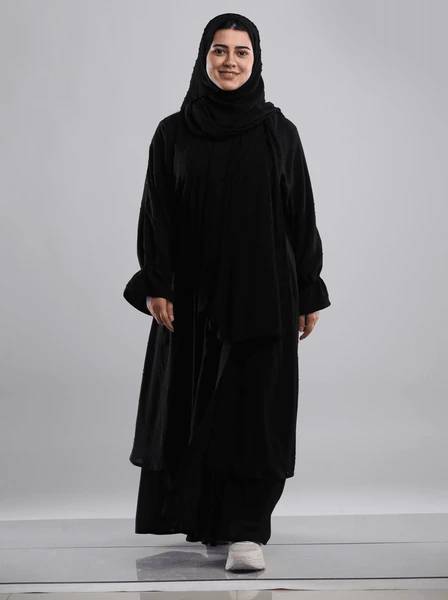
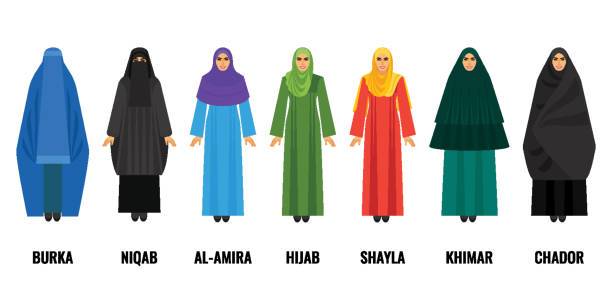 Women traditionally wear the abaya, a long-sleeved, floor length and loose fitting dress, usually in black. It covers the entire body and is often covered with intricate embroidery or embellishments. They also wear a lightweight headscarf called a shayla which covers the hair and neck. Some women wear a face veil called a burqu or battoulah which covers the entire face except for the eyes.
The style of clothing is very similar between the Gulf States. Although, modest details on the kandura and abaya can help distinguish the difference between countries. This includes even the way men wear the ghutrah, which can help distinguish their heritage. Both men and women commonly wore sandals, especially open toe designs without a slingback or heel strap.
Clothing Resources
Music
Music and dance have always been a part of Emirati culture. Traditionally, they were performed to entertain workers who accomplished something successful. Ayala or the ‘stick dance‘ is one of the folk dance forms. It involves performances by two rows of dancers facing one another. Dancers are positioned close together in rows, signifying the unity and co-operation among tribal people. It is accompanied by drumming. Some of the instruments featured in traditional Emirati music are the oud (a stringed instrument), tabl (a drum) and a rababa (a bowed instrument).
Al Wahabiyyah is one of the oldest art forms of Ras Al Khaimah and is only performed there. The songs during this performance are divided into three sections. Drum players stand between two rows of performers comprising the band. One of the performers begins by reciting a line of poetry. He repeats it a number of times until the other performers have memorized it. Then he recites another line of poetry from the same poem. The first line is a start and the second is the ostinato, or pedal. The two rows of dancers rhythmically move forward and backward, a row bows and drummers keep drawing nearer to it for 10 minutes while moving their heads. The opposite row repeats the movements as the drummers draw nearer to them as well. Dancers with swords and guns add charm to the show. The dance was inscribed in 2014 on the UNESCO ‘Representative List of the Intangible Cultural Heritage of Humanity’.
Today, Emiratis play traditional music and perform traditional dances on important social occasions, such as Eids — religious holidays — and weddings. The traditional music relies heavily on drums, tambourines and musical instruments that were used by the Bedouin — the area’s original, nomadic tribes.
In addition to the traditional music and folk dances, there is a large underground pop music movement among the youth, especially expats. Dubai’s famous and lavish nightlife has attracted many well-known international singers, DJs and dancers. Some of the main genres explored at these underground events are rock, metal, ska, punk, and house music. Some of the notable figures that have stemmed from the UAE are Narcy, Karl Wolf, and Eslam Jawaad.
Music Resources
Sites & Places of Interest
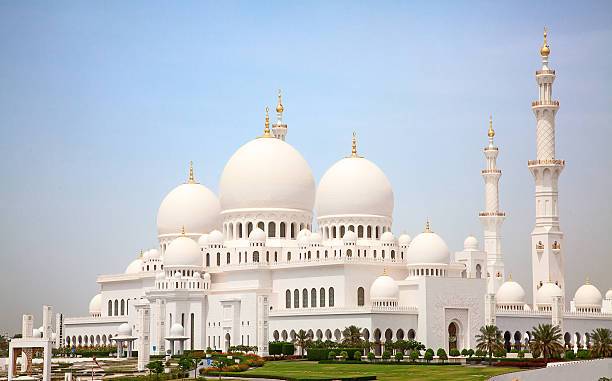 The UAE, specifically Dubai, has come to be known as a luxury tourist destination. Beautiful hotels, restaurants and resorts have been built, alongside architectural feats such as the world’s tallest building, largest fountain, biggest shopping mall, and largest man-made island.
There are several modern features of architecture in addition to historical sites, such as the Sheikh Zayed Grand Mosque, Qasr al-Hosn, Louvre Abu Dhabi, Al Fahidi Quarter, and the Bastakia District.
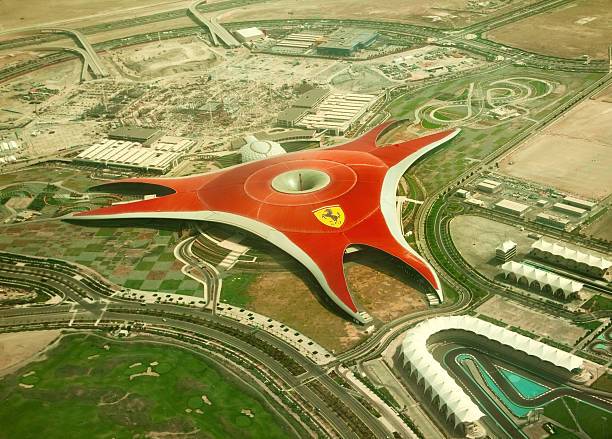 There are plenty of entertainment parks including the Ferrari World Abu Dhabi where you can find the world’s fastest roller coaster. At Dubai Miracle Garden you will find the world’s largest natural flower garden with over 109 different flowers. For those seeking a more adventurous place, Jebel Jais in the Ras Al-Khaimah emirate holds stunning views of the coast from the mountains and also holds the world’s longest zipline.
The Burj Khalifa , at a height of 2,716.5 feet (828 meters) with 160 stories, is the tallest building in the world. It holds the world records for the highest number of floors, highest occupied floor, tallest free-standing structure, highest outdoor observation deck, elevator with the longest travel distance and tallest service elevator.
Sites & Places of Interest Resources
Sports
 Emiratis enjoy being in the desert and falconry is a tradition that continues to be popular among locals. The falcons were traditionally used by the Bedouins for hunting and it is still a part of the culture to train the falcons and hunt with them. Owning a falcon has also become a matter of pride and is almost seen as prestigious as owning an Arabian horse. Falconry was recognized as a living human heritage by UNESCO in 2016.
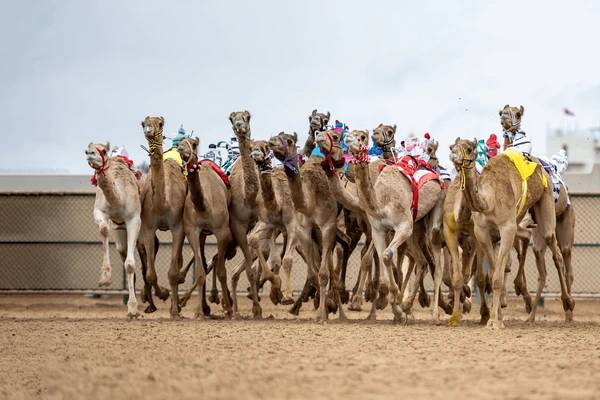
Because of the desert terrain, the traditional sports of horse and camel racing are still popular. Camel racing is an integral part of the culture and takes place at a special track and money prizes are involved. The main camel racing events occur at the Al Marmoom RaceTrack from October to April.
Horse racing is more common, since there are more equestrian clubs and people have access to lessons and equipment. The main season for horse racing occurs from November to March at the Meydan Race Course every friday.
The coastal location and hot climate have made water sports a hobby of many. Being known as a former fishing society, Emiratis have a long tradition of spending time boating and sailing.
Football is the nation’s most popular sport and Zayed Sports City Stadium in Abu Dhabi is the biggest sports complex in the Middle East. The big South Asian population has made cricket the second most popular sport in the UAE.
Abu Dhabi started hosting the Abu Dhabi Grand Prix in 2009, a Formula One motor race that has become very popular and attracts many tourists and celebrities. The race is held every fall at Yas Marina Circuit, one of the world’s most technologically advanced Formula One circuits. Yas Marina Circuit encourages the growth of sporting culture and is being used for numerous purposes, including the Colour Run and business events.
Sports Resources
Latest News & Commentary on the UAE
- Middle East Policy Council
- Scholarly essays, commentary and forums on the United Arab Emirates
- Click here to visit
- The New York Times